

Break a car park into workable sections
List bays by level, then identify driving aisles, ramps, pedestrian routes and lift lobbies. A plan with the usable bays marked is more helpful than the building's total parking capacity. Point out low clearances, storage cages, accessible parking and areas that can't be closed at the same time.
Give residents and tenants clear notice
Bays must be empty when they are washed. Agree who sends notices and where drivers can park while the section is unavailable. Confirm water supply, drainage and how pedestrian access to the lifts will be managed before setting the sequence.
Tell us about marks and surface coatings
Oil drips, rubber marks and general dust need different treatment; old staining may remain on porous concrete. Identify priority areas at the inspection so the expected result is clear. For building foyers, lifts and regular bin room care, see strata common-area cleaning.
Typically included in the scope
- Parking bays and driving aisles
- Ramps and entries
- Pedestrian walkways, stairs and lift lobbies
- Bin and storage areas
- Oil and tyre mark treatment
The final scope is confirmed in your written quote.
Who usually asks for this
- Strata and body corporate managers
- Building managers
- Shopping centre managers
Photos from car park wash-down work
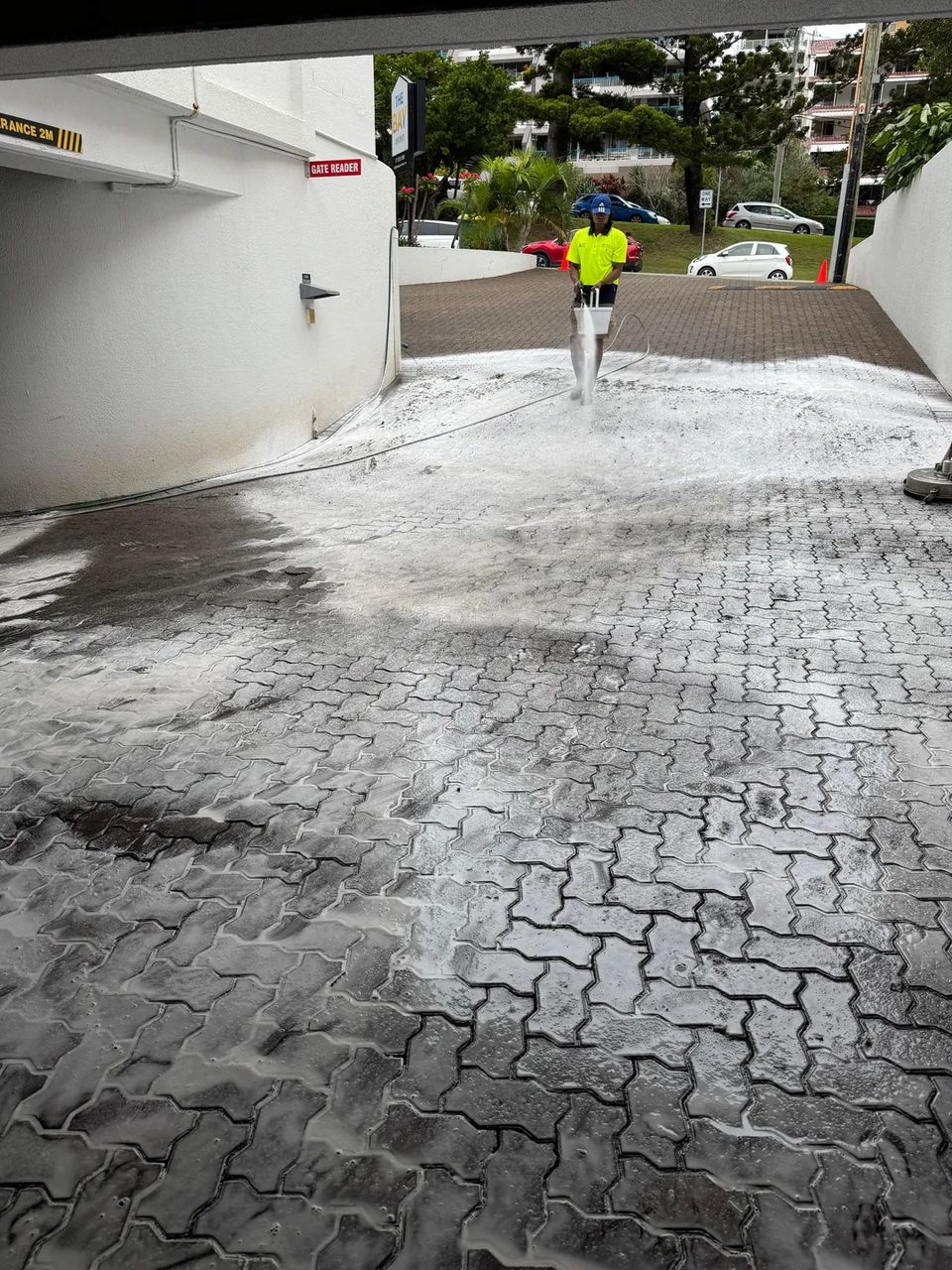
Washing a car park entry ramp.

Questions about car park wash-down
Can you clean around cars that haven't been moved?
Occupied bays cannot be washed as if they were empty. Agree the notice period and the approach to missed bays with the building manager before the work starts.
What details help price a basement wash-down?
Give the approximate number of bays, levels and ramps, surface condition and access restrictions. Identify any wash water or drainage arrangements the building requires.